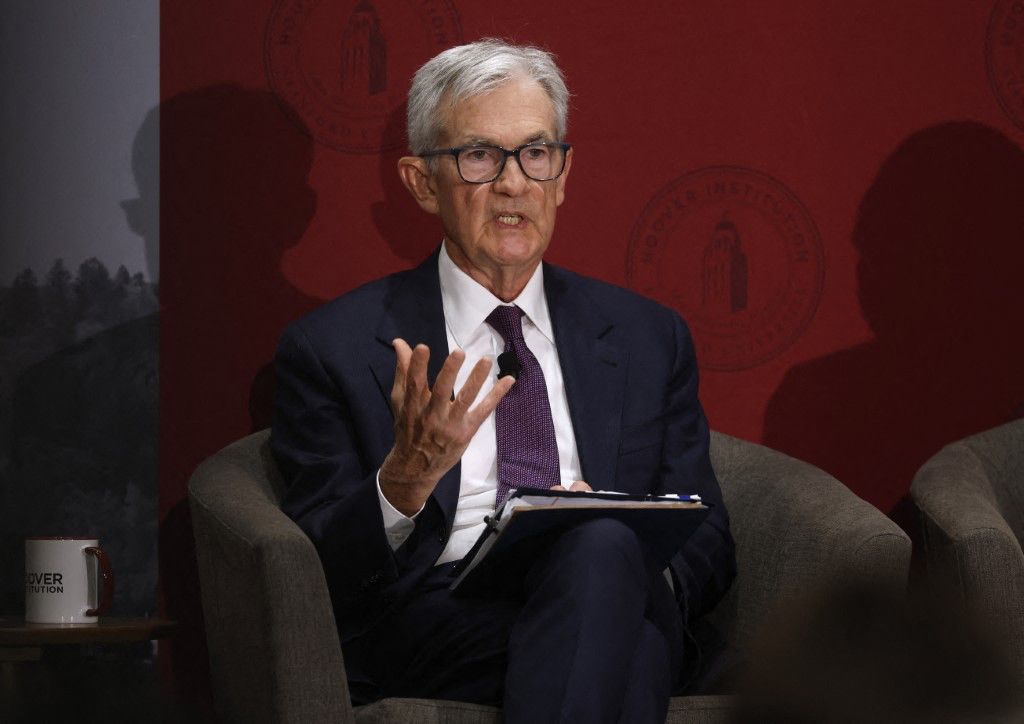
The Federal Reserve on Wednesday voted to cut interest rates for the third consecutive meeting, lowering borrowing costs as markets anticipate a more cautious approach to monetary policy in the year ahead.
Key facts
The Federal Open Market Committee (FOMC) voted 9–3 to reduce the benchmark interest rate by a quarter percentage point to a range of 3.5% to 3.75%, down from the 3.75% to 4% range approved at the October meeting.
Three officials dissented—the first multiple dissent votes since September 2019. Fed Governor Stephen Miran favored a larger half-point cut, while Chicago Fed President Austan Goolsbee and Kansas City Fed President Jeffrey Schmid preferred to keep rates unchanged.
The Fed’s “dot plot,” which reflects policymakers’ interest rate projections, showed expectations for just one additional quarter-point cut in 2026 and another in 2027, bringing the federal funds rate to a projected range of 3% to 3.25%.
The Fed also adjusted its policy statement, saying it would consider the “extent and timing of additional adjustments” to rates—language last used in December 2024, after which the central bank paused rate cuts until September.
What Jerome Powell said
Fed Chair Jerome Powell said at a press conference that interest rates are now “within a range of plausible estimates of neutral,” suggesting policymakers are likely to pause further cuts while assessing economic data.
Powell said there had been “very little” new inflation data since the Fed’s October meeting and noted that inflation pressures have eased, though they remain “somewhat elevated” above the Fed’s 2% target.
Analysts at Goldman Sachs said Powell’s remarks indicated the “bar has risen” for additional rate cuts.
Will the Fed cut rates next year?
Market expectations suggest a pause is likely at the Fed’s January meeting. Traders have priced in roughly a 72% chance that rates will be held steady, according to futures data. Betting markets similarly favor no change at the Fed’s meetings in January, March, and April.
Goldman Sachs analysts said a January cut “could turn out to be appropriate” if upcoming economic data shows a significant deterioration in growth or labor market conditions.
Who could replace Jerome Powell?
President Donald Trump, who has criticized Powell for moving too slowly on rate cuts, said he expects to announce a successor “probably early next year.” Powell’s term as Fed chair expires in May 2026.
National Economic Council Director Kevin Hassett has emerged as a leading contender, followed by former Fed Governor Kevin Warsh, Treasury Secretary Scott Bessent, and current Fed Governor Christopher Waller. Hassett said Tuesday there was “plenty of room” for rate cuts in 2026 and supported Wednesday’s reduction, suggesting larger cuts could be warranted.
Background
Expectations for a rate cut strengthened last month after New York Fed President John Williams said there was room for a reduction in the “near term.” That optimism faded after Powell said a further cut was “not a foregone conclusion.”
Market expectations fluctuated sharply in recent weeks, with odds of a rate cut rising to nearly 90% ahead of the meeting after earlier falling below 40%.
Several Fed officials had signaled support for easing, including San Francisco Fed President Mary Daly, who said concerns had shifted from inflation toward weakening labor market conditions.
Major banks including JPMorgan, Morgan Stanley, Nomura, and Standard Chartered reversed earlier forecasts and predicted a rate cut, citing inconclusive economic data following the recent government shutdown.