In January 2017, Costa Rica’s then president Luis Guillermo Solís visited the U.A.E., strengthening investment ties between the Gulf and Central America. His visit also highlighted something Costa Rica has quietly mastered—how to build a nation around renewable energy, wellbeing, and happiness.
As the U.A.E. places sustainability and happiness at the heart of its long-term vision, Costa Rica offers a compelling case study. The small Latin American country has repeatedly shown that environmental responsibility and human wellbeing can go hand in hand. Last year, the Happy Planet Index named Costa Rica the happiest country in the world—for the third time.
President Solís believes the reason is simple: peace and security.
“I think it’s a combination of things,” he explains. “Humans and animals are happy when they are not fearful. If you’re reasonably fit, reasonably sheltered, and you don’t live with the threat of being killed, then you tend to live happily. If Costa Ricans are among the happiest people in the world—and I hope we are—it’s because we’ve been able to overcome many of those fears through public policy.”
He points to the foundations of Costa Rican society: social security, public education, the rule of law, and programs that empower women economically and socially. “Fear has very little space to develop,” he says. “We are stable. We have learned that nature and production are not contradictory, and we use that understanding to strengthen our democratic institutions.”
Investing in people, not weapons
A defining moment in Costa Rica’s history came in 1949, when the country abolished its army. Since then, public spending has been redirected toward education, healthcare, and housing—investments that have shaped modern Costa Rican society.
The nation’s wealth has traditionally come from agriculture, exporting products such as coffee and fruit, alongside a steadily growing tourism industry. After a downturn following the 2008 global financial crisis, tourism has rebounded strongly.
Despite spanning just 200 miles from the Pacific Ocean to the Caribbean Sea, Costa Rica now welcomes annual visitors equal to more than 60% of its population—a significant boost for farmers, retailers, and hospitality businesses.
“Tourism is quickly becoming the most important source of revenue for the country,” says Solís. “Much more than industrial production or anything else. Last year we received three million visitors. In a country of 4.5 million people, that’s remarkable.”
Ecotourism and environmental balance
A major driver of this growth has been ecotourism, which Solís describes as both economically and environmentally transformative.
“Ecotourism has become very important—not only because of the diversified market Costa Rica offers, but because it helps people living in environmentally attractive areas protect those spaces,” he explains. “It has a virtuous impact. People involved in ecological tourism want to take care of their farms and forests. They become social controllers.”
At the same time, Costa Rica recognizes the risks. Millions of visitors moving through national parks can lead to litter, noise, and habitat destruction. To counter this, the government has imposed strict limitations—sometimes even closing parks temporarily to control visitor numbers.
“The key is balance,” Solís says, stressing that environmental protection remains non-negotiable.
A renewable energy leader
Costa Rica’s commitment to sustainability extends well beyond tourism. For the past two years, the country has generated over 98% of its electricity from renewable sources. In 2015, it ran on renewables for 271 days, and in 2016 for 270 days, with hydroelectric power accounting for roughly 75% of the energy mix.
“I think it has proven that sustainability works,” Solís says. “And that it can become a successful model worldwide.”
He is candid, however, about ongoing challenges—particularly transportation. “Fossil fuels are still a reality for our cars,” he admits. “We can’t simply eliminate them overnight. There’s a gradual process—substituting or complementing the fleet with cleaner fuels, electric vehicles, and renewable-powered public transport systems.”
Costa Rica continues to push forward, strongly supporting the Paris Agreement and developing its Green Hub, a platform designed to share best practices in forestry and environmental management globally.
A new destination for Gulf travelers
With Emirates and Etihad offering direct flights to the U.S., and Costa Rica now waiving visa requirements for Emirati visitors, the country is more accessible than ever for travelers from the Gulf.
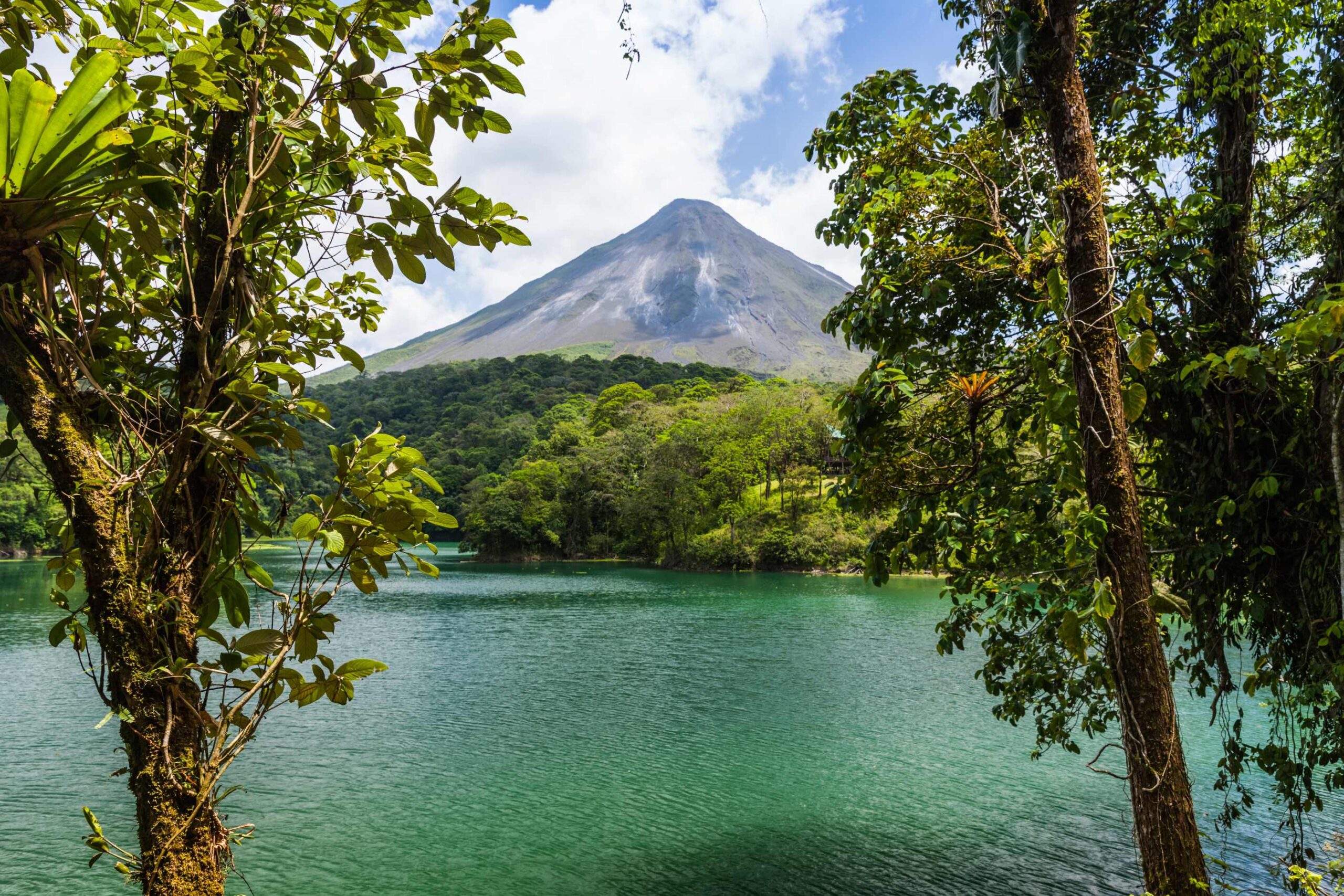
With its pristine landscapes, renewable energy leadership, and a population renowned for its happiness, Costa Rica presents not just an idyllic escape—but a powerful example of how sustainability and quality of life can thrive together.