Here is a fully rewritten and refined version of your article with all links removed and no hyphens used anywhere, while preserving meaning, structure, and editorial tone.
This story appeared in the October 2025 issue featuring the annual Healthcare Leaders ranking.
From the turquoise waters of the Mediterranean coast and the golden stretches of the Sahara to the Atlas Mountains in the north, Tunisia has long been defined by contrast and progress. During the nineteen eighties, the country emerged as a regional pioneer in healthcare reform, introducing mass vaccination campaigns and nationwide public health programs that significantly improved health outcomes. Infant mortality declined sharply from approximately ninety deaths per one thousand live births in 1986, while life expectancy rose to nearly fifty eight years.
That same year marked the founding of Kilani Group by brothers Lassaad and Rafik Kilani. The company began its journey in pharmaceuticals with the establishment of KIPROPHA, initially focused on local manufacturing through a single licensing agreement and a limited portfolio of generic medicines. Over time, this modest beginning evolved into strategic partnerships with leading global pharmaceutical companies including GSK, Merck, Novartis, Abbott, and Servier. These alliances laid the groundwork for a broader strategy encompassing industrial production, distribution, and healthcare related services.
The group gradually expanded into nine healthcare focused companies, including Teriak, founded in Tunisia in 1996 as Kilani Group’s second pharmaceutical manufacturing entity. Operating two production sites, Teriak manufactures both licensed and generic medicines and works with licensors from among the world’s leading pharmaceutical firms. Today, its portfolio includes more than two hundred seventy registered medicines in Tunisia.
Tunisia’s steady economic progress in recent years has supported rising disposable incomes and increased consumer spending, driving demand within the pharmaceutical sector. At the same time, wider affordability has expanded access to healthcare products and services, with the growing adoption of generic medicines accelerating market development and broadening patient reach. Building on this momentum, Kilani Group pursued international expansion, acquiring Cinpharm in Cameroon in 2015 and Cipharm in Côte d’Ivoire in 2020. These moves established a presence in sub Saharan Africa and strengthened the group’s export capabilities. Today, with more than five hundred medicines registered outside Tunisia, Kilani’s strategy focuses on expanding exports through both direct channels and local manufacturing partnerships.
A major milestone came in 2022 with the acquisition of ADWYA, a leading Tunisian pharmaceutical company founded in 1984. ADWYA manufactures more than two hundred forty five medicines locally and operates across seven countries, reinforcing Kilani Group’s position as a key player in the regional pharmaceutical landscape.
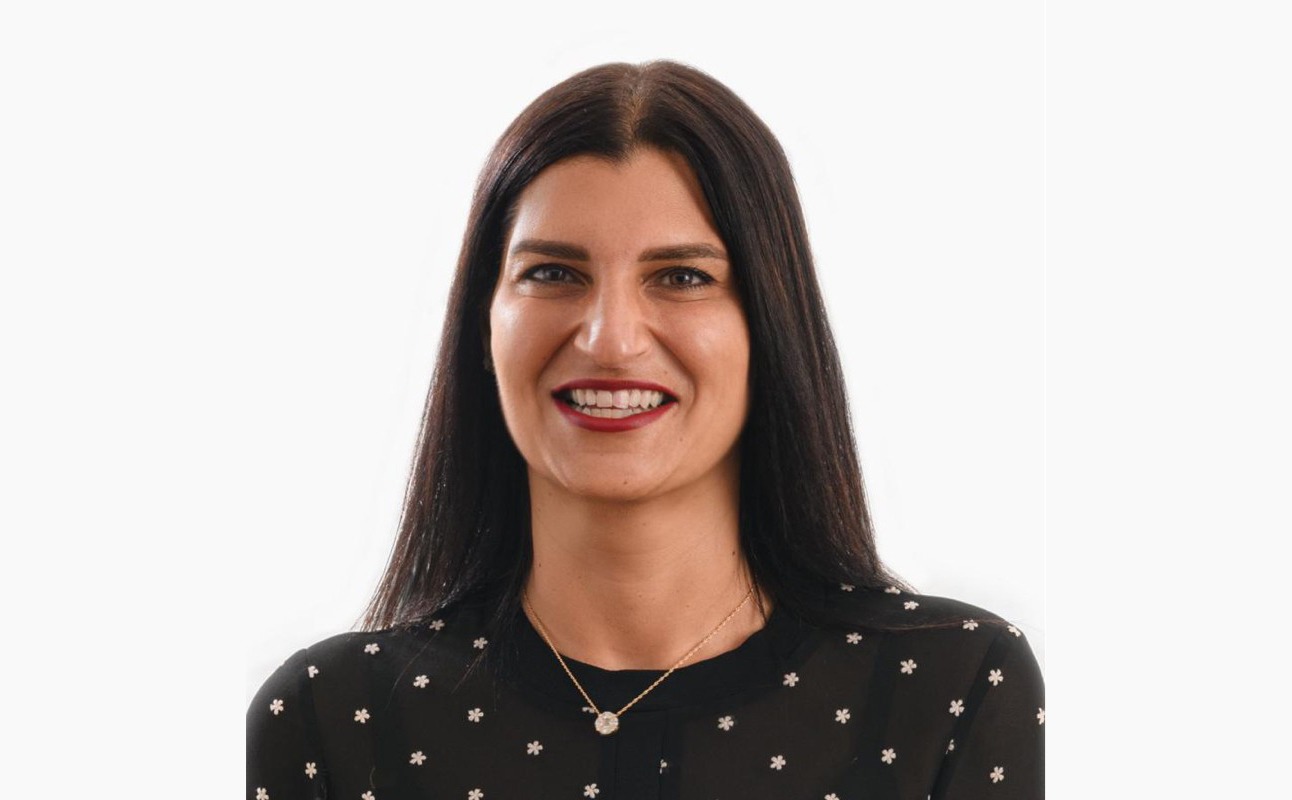
Alongside its core healthcare activities, Kilani Group has steadily expanded into adjacent sectors. According to Chief Executive Officer Sara Masmoudi, the group’s growth has always followed activities closely aligned with its foundations. In 2007, Kilani entered retail with the acquisition of Fatales, a cosmetics chain positioned as a care and beauty concept comparable to Sephora within Tunisia. This move paved the way for further diversification.
Beyond healthcare, the group diversified in 2014 through a distribution partnership with Procter and Gamble and later strengthened its fast moving consumer goods presence by acquiring Nestlé’s Tunisian assets. In 2022, Kilani entered premium retail through partnerships with Nespresso, MAC, and L’Occitane in Tunisia, while franchising Fatales in Libya and Mauritania with plans to scale across sub Saharan Africa and the Middle East. In 2025, the group expanded into car dealerships and construction equipment, marking its first step into the automotive and industrial sectors. It also maintains operations in agriculture and real estate, which remain smaller today but are positioned as long term growth pillars. Masmoudi explains that sustainable and balanced growth is central to the group’s vision, noting that expansion into new sectors is a natural evolution of the capabilities built over decades.
Kilani Group is also preparing to enter the biosimilars segment with a dedicated production facility approved by the Ministry of Health, while expanding into medical devices and dermocosmetics, both identified as key growth drivers. Its distribution arm works with global healthcare leaders such as Roche Diagnostics, Medtronic, Allergan, Pierre Fabre, and Nuxe, and extends into cosmetics and luxury distribution through partnerships with LVMH, L’Oréal, and Puig. Together, these ventures have positioned Kilani as a diversified pharmaceutical and healthcare group with ambitions that extend well beyond Tunisia.
Tunisia’s pharmaceutical market is expected to generate approximately two hundred eighty million dollars in revenue in 2025, with growth projected to continue at a compound annual rate of just over four percent through 2030, reaching nearly three hundred forty five million dollars. Regulatory reforms in recent years are reshaping the sector, creating a more supportive environment for local players, attracting foreign investment, and supporting long term expansion.
According to healthcare expert Jihed Sioud, Tunisia stands at a pivotal moment in its healthcare transformation, with strong political commitment and international support converging to build a modern and resilient health system. He highlights the Ministry of Health’s ambitious digital first agenda, positioning Tunisia as a regional leader in healthcare innovation. For him, the ongoing digital transformation represents one of the most comprehensive modernization efforts in North Africa.
Against this backdrop, Kilani Group emphasizes that its strategy rests on stability, innovation, and diversification. Maintaining cohesion across its diverse portfolio remains a priority. Masmoudi notes that while the group began as a healthcare focused organization, its growth has required continuous restructuring of group support functions, with a focus on people and processes to ensure sustainability. Dedicated committees bring together general managers from both acquired and newly created entities to exchange ideas and reinforce shared values. According to the CEO, while systems and talent are critical, it is communication and the consistent sharing of values that truly bind the organization together.
From a performance perspective, Kilani Group aims to ensure sustainable growth across all its businesses. Masmoudi explains that acquisitions are pursued with the objective of scaling companies further rather than simply absorbing them. By the end of 2024, the group reached approximately two hundred twenty million dollars in revenue and expects to exceed three hundred forty million dollars in 2025, representing roughly twenty five percent growth driven largely by acquisitions.
Masmoudi has served as Chief Executive Officer since October 2019, following leadership roles across several Kilani entities and responsibility for business development and acquisitions. She became General Manager of Teriak in 2003, previously served as Group Chief Financial Officer from 1998 to 2003, and later led both Cinpharm and Cipharm as Chief Executive Officer. Having joined the group in 1997 as a business development engineer, she grew alongside the organization. This progression, she says, provided a deep understanding of the group’s values and vision, enabling fast decision making and clarity in addressing challenges and opportunities.
Since 2019, Kilani Group has pursued an aggressive growth strategy. The challenge, Masmoudi explains, lies in balancing rapid organic and acquisition driven expansion with financial stability and strategic coherence. She likens the process to assembling a puzzle, where each piece must fit naturally. This balance is supported by the group’s ownership structure, with the company remaining fully owned by its founders, Lassaad and Rafik Kilani, and growth funded entirely through their equity support. This stability provides the freedom to expand boldly while maintaining a long term vision grounded in shared values.
Africa represents a natural next frontier for Kilani Group. Masmoudi explains that Tunisia’s geographic position made expansion southward an obvious step. While the continent’s pharmaceutical landscape remains underdeveloped, with local manufacturing meeting less than six percent of demand, this gap presents a significant opportunity. Kilani’s early acquisitions in Cameroon and Côte d’Ivoire marked the beginning of a long term strategy to build exports while investing in local manufacturing capacity.
Despite the challenges of regulatory complexity and parallel trade, the group remains committed to Africa’s long term potential. Today, Kilani is evaluating further expansion across North Africa, particularly in Egypt and Libya, as well as select francophone markets in sub Saharan Africa. At the same time, it is exploring acquisition opportunities in the Middle East, especially in Saudi Arabia, to accelerate growth and replicate its successful acquisition led model.
Innovation remains central to Kilani’s strategy. The group is aligning with Tunisia’s new medicine registration framework effective September 2025 and has launched a group wide digital transformation initiative supported by its internal innovation platform, Atelier Innovation. Masmoudi emphasizes that without a strong digital backbone, meaningful innovation is not possible. The group also collaborates with startups to drive automation and artificial intelligence capabilities, leveraging their agility while supporting their growth.
According to Sioud, Tunisia’s healthcare transformation rests on three pillars. These include nationwide restructuring of primary care supported by digital projects launched in 2025, integration of artificial intelligence into health system decision making, and the growth of medical tourism driven by investments in advanced medical technologies and a national electronic health records system scheduled for completion in 2026.
Beyond healthcare, Kilani Group is redefining corporate purpose by integrating art and culture into its business philosophy. Masmoudi believes that while academic learning builds knowledge, art and culture shape well rounded individuals. This perspective is being embedded into the group’s corporate values to foster creativity, openness, and a deeper sense of humanity.
Looking ahead, balanced growth remains the cornerstone of Kilani Group’s future. Masmoudi notes that the group’s expansion has been evenly split between organic growth and acquisitions, demonstrating strength in both approaches. Going forward, Kilani will continue pursuing international markets through carefully selected acquisitions while maintaining strong financial discipline supported by stable long term shareholders. Pharmaceuticals and healthcare will remain central, with a strong focus on biosimilars, new generics, over the counter products, and medical devices. At the same time, the group will continue diversifying beyond healthcare to unlock new growth opportunities and strengthen its position as a forward looking regional leader.
On the possibility of future listings, Masmoudi remains pragmatic. She notes that while the group once acquired and later delisted a public company, its current ownership structure provides speed and flexibility in decision making. As long as Kilani can grow independently, it will do so. However, if the right opportunity arises, a public listing may be considered not for visibility, but as a strategic tool to support the next phase of growth.