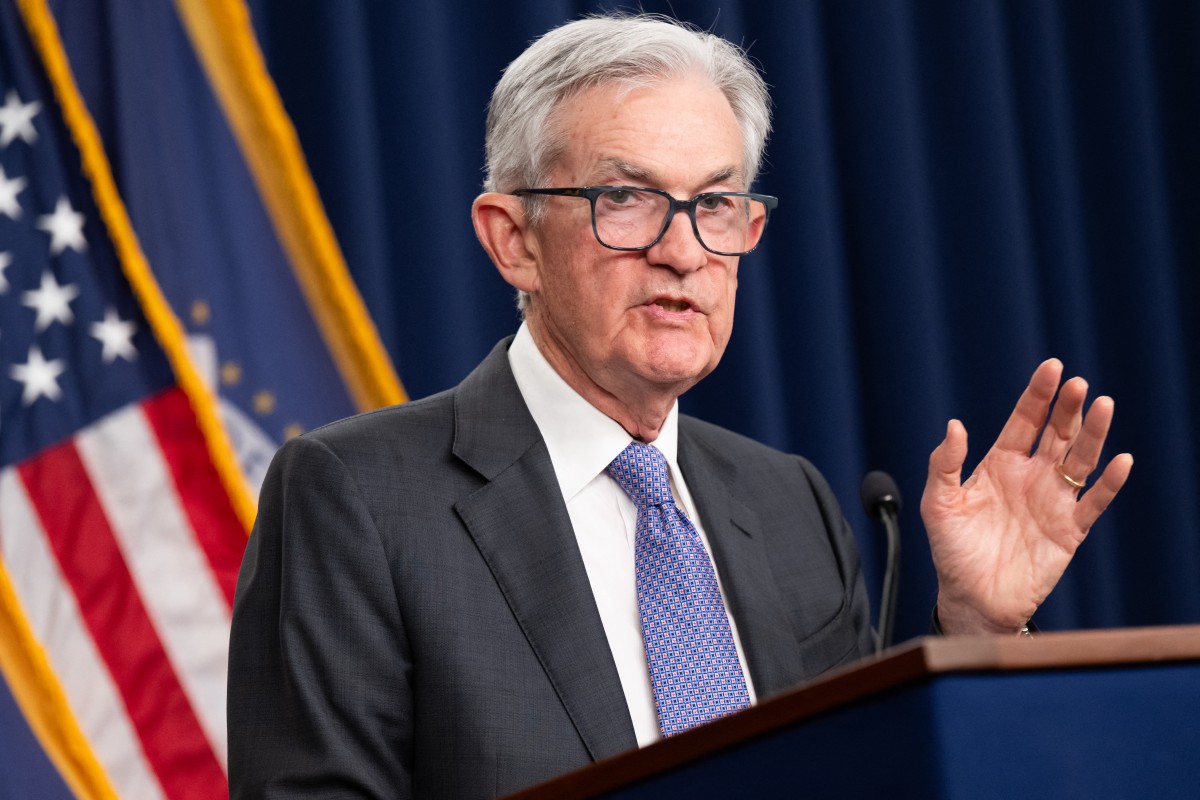
The U.S. Justice Department is investigating Federal Reserve Chair Jerome Powell, he confirmed on Sunday, after reports surfaced that federal prosecutors had opened a criminal probe into his conduct. The investigation reportedly centers on Powell’s comments to Congress regarding renovations to the Federal Reserve’s headquarters, though the legal basis for the probe remains uncertain and any effort to remove Powell from office would likely face significant judicial hurdles.
Key facts
Powell confirmed in a video statement that the Federal Reserve has received grand jury subpoenas and that he is under investigation by the Department of Justice.
The probe reportedly focuses on testimony Powell delivered to Congress in June, in which he stated that certain elements of the Federal Reserve’s headquarters renovation plan differed from designs initially approved by the National Capital Planning Commission.
Powell, however, said on Sunday that the investigation is politically motivated and stems from his refusal to lower interest rates at the request of President Donald Trump. “The threat of criminal charges is a consequence of the Federal Reserve setting interest rates based on our best assessment of what will serve the public, rather than following the preferences of the President,” Powell said.
The investigation has intensified speculation that Trump could attempt to remove Powell from his post. Powell’s term as Fed chair expires in May, though he can remain on the Federal Reserve Board until 2028.
Under the Federal Reserve Act, a president may only dismiss the Fed chair “for cause,” typically defined as serious misconduct. Legal experts note it remains unclear whether the Supreme Court would uphold any attempt to fire Powell, given the Court’s prior statements emphasizing the Federal Reserve’s unique independence from the executive branch.
The existence of a criminal investigation does not mean Powell will necessarily face indictment or conviction. Several recent DOJ cases against political figures opposed to Trump have failed in court.
What did Jerome Powell tell Congress?
In June, Powell testified before the Senate Banking Committee regarding the Federal Reserve’s Washington, D.C. renovation project, which has drawn scrutiny after costs surged to approximately $2.5 billion.
During the hearing, Powell stated that several features included in the original 2021 proposal were “no longer in the plans,” including a roof terrace garden, water features, private elevators, and luxury upgrades. “There’s no VIP dining room,” Powell testified, according to the Associated Press. “There’s no new marble. … There are no special elevators. … There are no new water features. … And there’s no roof terrace gardens.”
Following the testimony, White House officials — including Office of Management and Budget Director Russell Vought — criticized Powell’s remarks. In a letter to Powell, Vought suggested that changes to the renovation plan could violate the National Capital Planning Act, which requires approval for substantial modifications to federally approved building projects.
Do Powell’s comments violate the law?
The White House and the Federal Reserve dispute whether the central bank is legally required to seek approval from the National Capital Planning Commission.
While the commission has oversight authority over federal buildings, the Federal Reserve Act grants the Fed broad autonomy over its facilities. The law states that the Fed’s Board of Governors may “take all such steps as it may deem necessary or appropriate” regarding the construction, remodeling, and maintenance of its buildings, and that the Board shall have “sole control” over them.
The Federal Reserve has argued it voluntarily coordinated with the planning commission but is not legally obligated to do so. It also maintains that only a limited number of design changes were made and that these do not constitute “substantial changes” requiring renewed approval.
Is Trump punishing Powell over interest rates?
Powell has argued that the investigation is retaliation for his resistance to pressure from President Trump to aggressively cut interest rates.
Trump has repeatedly criticized Powell for keeping rates higher than he prefers and has openly discussed removing him from office. While the Federal Reserve has reduced interest rates during Trump’s second term, it has not done so at the pace or scale the president has demanded.
In his Sunday statement, Powell defended the Fed’s policy decisions, stating that interest rates are set “based on evidence and economic conditions,” and that his actions have been “focused solely on our mandate of price stability and maximum employment.”
Can Trump fire Jerome Powell?
The Federal Reserve Act permits removal of the Fed chair only “for cause,” generally interpreted as serious professional misconduct. Trump could attempt to cite the DOJ investigation as justification, similar to his prior attempt to remove Fed Governor Lisa Cook amid allegations related to her personal mortgage filings.
However, Cook remains on the Federal Reserve Board after courts blocked her removal, and the Supreme Court is expected to review the legality of Trump’s action later this month.
Although the Supreme Court has allowed presidents to remove officials from other independent agencies, justices have previously signaled greater caution regarding the Federal Reserve, describing it as a “uniquely structured, quasi-private entity” with deep historical roots in U.S. financial governance.
Will Jerome Powell face criminal charges?
A DOJ investigation does not guarantee criminal charges. Any indictment would require approval by a grand jury, and while indictments are often approved, several recent high-profile cases pursued by the Trump administration have been dismissed or rejected by juries.
Even if Powell were indicted, the case could face significant legal challenges. Powell could argue the investigation represents political retaliation, citing Trump’s repeated public attacks on him over monetary policy decisions.