His Excellency Saeed Mohammed Al Tayer, Managing Director and CEO of Dubai Electricity and Water Authority (DEWA), outlines how DEWA’s sustainable transport blueprint is accelerating Dubai’s rise as a global leader in sustainability.
Dubai’s ambition to lead globally in sustainability is being shaped by a comprehensive and integrated electric mobility strategy led by DEWA. Guided by the vision of His Highness Sheikh Mohammed bin Rashid Al Maktoum, Vice President and Prime Minister of the UAE and Ruler of Dubai, the emirate is advancing toward becoming a global benchmark for smart cities, digital transformation, and low-carbon mobility.
DEWA’s electric mobility strategy is a central pillar of Dubai’s wider sustainability agenda. It supports the Dubai Green Mobility Strategy 2030, the Dubai Clean Energy Strategy 2050, and the Dubai Net Zero Carbon Emissions Strategy 2050. Together, these frameworks aim to ensure that 100 percent of Dubai’s energy needs are met from clean sources by 2050 through a coordinated portfolio of initiatives.
By combining clean energy generation, smart infrastructure, public-private collaboration, and progressive regulation, DEWA is helping transform Dubai’s transport sector into a model for low-carbon urban mobility. At the core of this effort is the Mohammed bin Rashid Al Maktoum Solar Park, the world’s largest single-site solar park developed under the independent power producer model. The park currently has a capacity of 3,860 megawatts, which is set to exceed 8,000 megawatts by 2030—well above the original target of 5,000 megawatts.
The solar park’s seventh phase, now in the tendering stage, will add 2,000 megawatts of photovoltaic capacity alongside 1,400 megawatts of battery storage providing six hours of energy. This phase alone will generate 4.5 terawatt-hours of clean electricity annually and reduce carbon emissions by 8.5 million tonnes per year, lifting clean energy’s share in Dubai’s energy mix to 36.1 percent, far exceeding earlier targets.
Supporting this is the Shams Dubai initiative, which enables households and businesses to generate solar energy and feed surplus power back into the grid. Since its launch in 2014, the initiative has connected 743.7 megawatts of distributed solar capacity across 8,602 sites, reinforcing Dubai’s transition toward decentralized clean energy.
All of this clean power is delivered through DEWA’s Smart Grid Strategy, a AED 7 billion investment that integrates artificial intelligence, automation, and real-time analytics. The smart grid ensures reliable and efficient distribution of renewable electricity to homes, businesses, and electric vehicle charging infrastructure without compromising system stability.
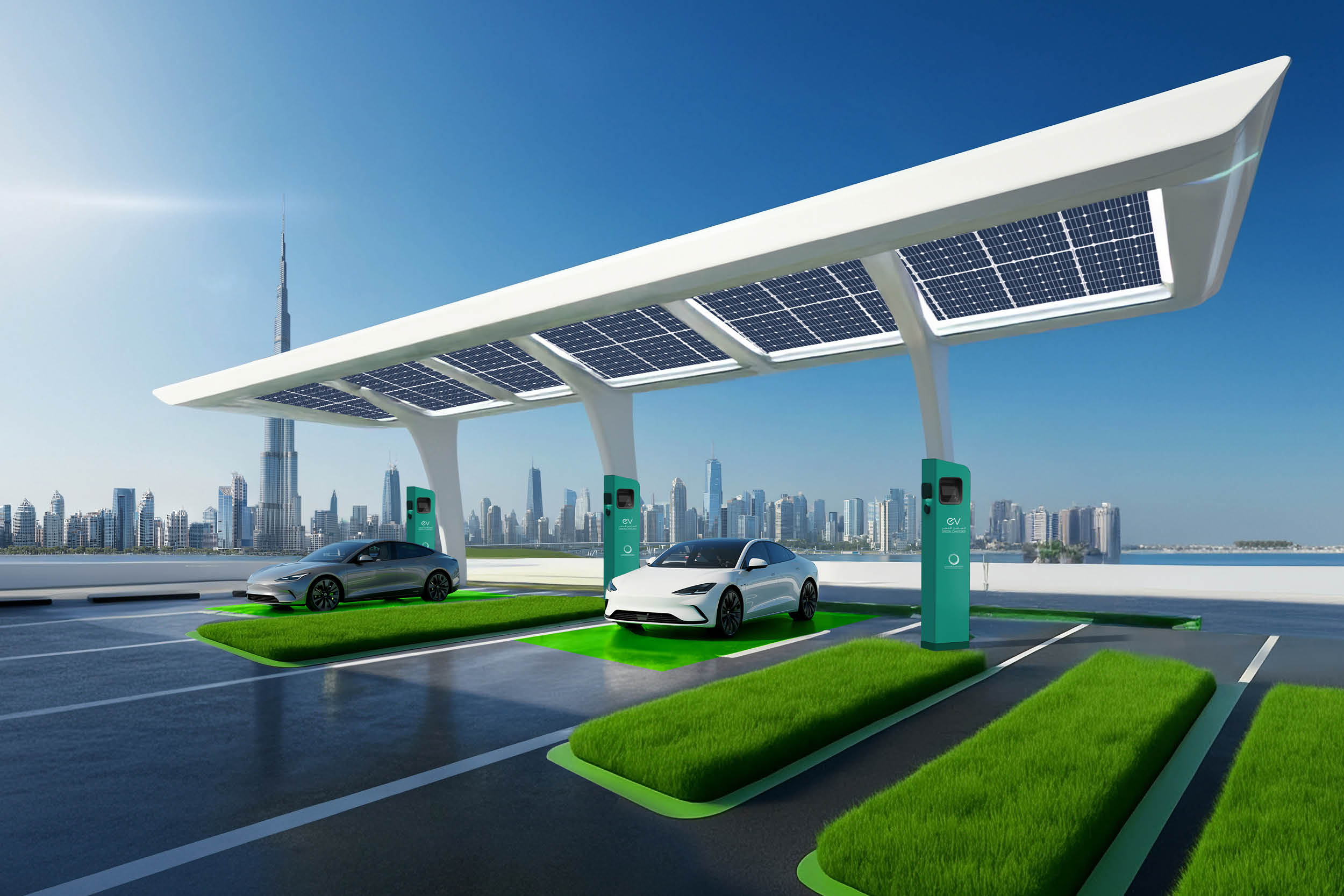
These efforts underpin DEWA’s EV Green Charger initiative, launched in 2014. In partnership with public and private stakeholders, DEWA has built a network of more than 1,700 electric vehicle charging points across Dubai. The network includes ultra-fast, fast, public, and wall-box chargers, all accessible through DEWA’s smart platforms. Features such as QR code activation and guest access ensure a seamless user experience.
This extensive charging network provides one of the most accessible public EV charging ecosystems in the region, reducing range anxiety and making electric vehicles a practical option for everyday use. As of October 2025, more than 20,000 customers were registered in the initiative, which has delivered over 46,000 megawatt-hours of electricity and enabled more than 230 million kilometers of electric vehicle travel.
DEWA’s commitment extends beyond infrastructure. In 2024, the authority introduced a regulatory and licensing framework for EV charging, allowing private operators to enter the market. Companies such as Tesla and UAEV became the first licensed independent charge point operators, supporting Dubai’s goal of having 50 percent of vehicles on its roads electric by 2050.
What makes this vision truly transformative is the integration of clean energy, smart grid management, and inclusive charging infrastructure. Alongside infrastructure and policy, DEWA promotes electric mobility through awareness campaigns, education, and strategic partnerships to ensure the transition benefits the entire community.
Collaborations continue to expand the ecosystem. With Parkin Company PJSC, 100 new 22-kilowatt AC chargers will be installed across residential areas, shopping malls, and street-parking zones, offering unified payment solutions. A partnership with ENOC Group adds ultra-fast chargers at service stations to support long-distance EV travel across the city. DEWA has also partnered with Dubai Taxi Company to install 208 ultra-fast chargers at two major hubs, supporting the electrification of the taxi fleet by 2040 and reducing nearly 38,000 metric tonnes of carbon dioxide emissions annually in the initial phase.
By seamlessly integrating solar power, smart grids, and accessible charging infrastructure, DEWA is building an ecosystem that does more than power vehicles. It strengthens climate resilience, enhances urban quality of life, and positions Dubai as a global testbed for green innovation. The journey to 2050 is already underway—one electric charge at a time.