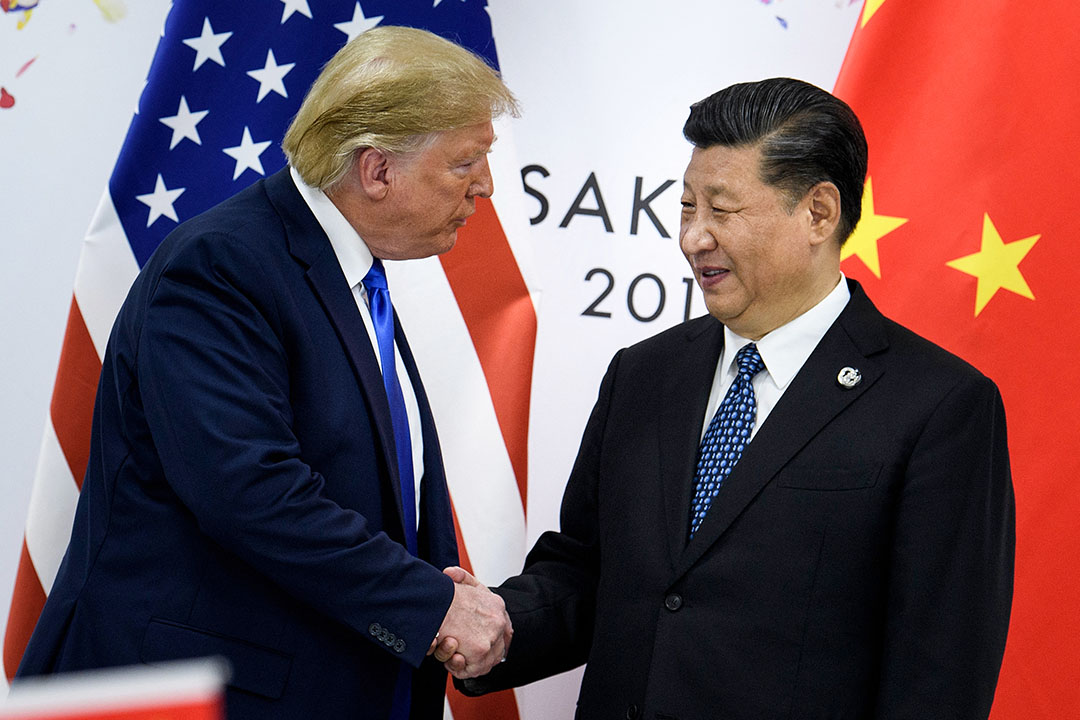
China announced on Wednesday that it will suspend an additional 24% tariff on US goods for one year while retaining a 10% duty, marking a fresh step toward easing trade tensions between the world’s two largest economies.
High-level talks
The move follows a high-level meeting last week between President Xi Jinping and US President Donald Trump, during which both sides agreed to de-escalate trade frictions and explore a new framework for cooperation.
In a statement, China’s State Council said the decision would “promote healthy, stable and sustainable economic and trade relations, benefit the people of both countries, and contribute to global prosperity.”
Beijing also said it would lift some tariffs of up to 15% on US agricultural imports starting November 10, signaling a broader effort to stabilize bilateral trade ties.
Mutual concessions
During the talks, the two leaders discussed expanding China’s purchases of US farm products, easing US export controls on advanced technology, and addressing long-standing concerns over market access and industrial policy.
According to China’s Ministry of Commerce, the US agreed to cut by 10% a tariff imposed over the flow of fentanyl into the United States, drop its threat of a new 100% tariff slated for November 1, and extend a pause on reciprocal tariffs for another year—steps that mark a notable cooling of Trump’s trade confrontation with Beijing.
In return, China agreed to extend for one year its suspension of export controls on rare-earth minerals, which were imposed in response to earlier US tariffs. Trump said the arrangement would need to be renegotiated after one year.
Exports under pressure
China’s economy remains under strain from slowing global demand and weak domestic consumption. Easing trade barriers is widely viewed as a way to stabilize imports, reassure foreign investors and support Beijing’s broader growth objectives.
Recent data, however, suggests China’s manufacturing sector is losing momentum. The RatingDog China General Manufacturing PMI, compiled by S&P Global, eased to 50.6 in October from 51.2 in September, missing expectations of 50.9 in a Reuters poll.
The slower pace of expansion was driven by weak growth in new orders, particularly from overseas markets. While domestic demand and sales promotions supported a fifth consecutive monthly rise in new business, export orders fell at their fastest rate since May, underscoring ongoing uncertainty in global trade.