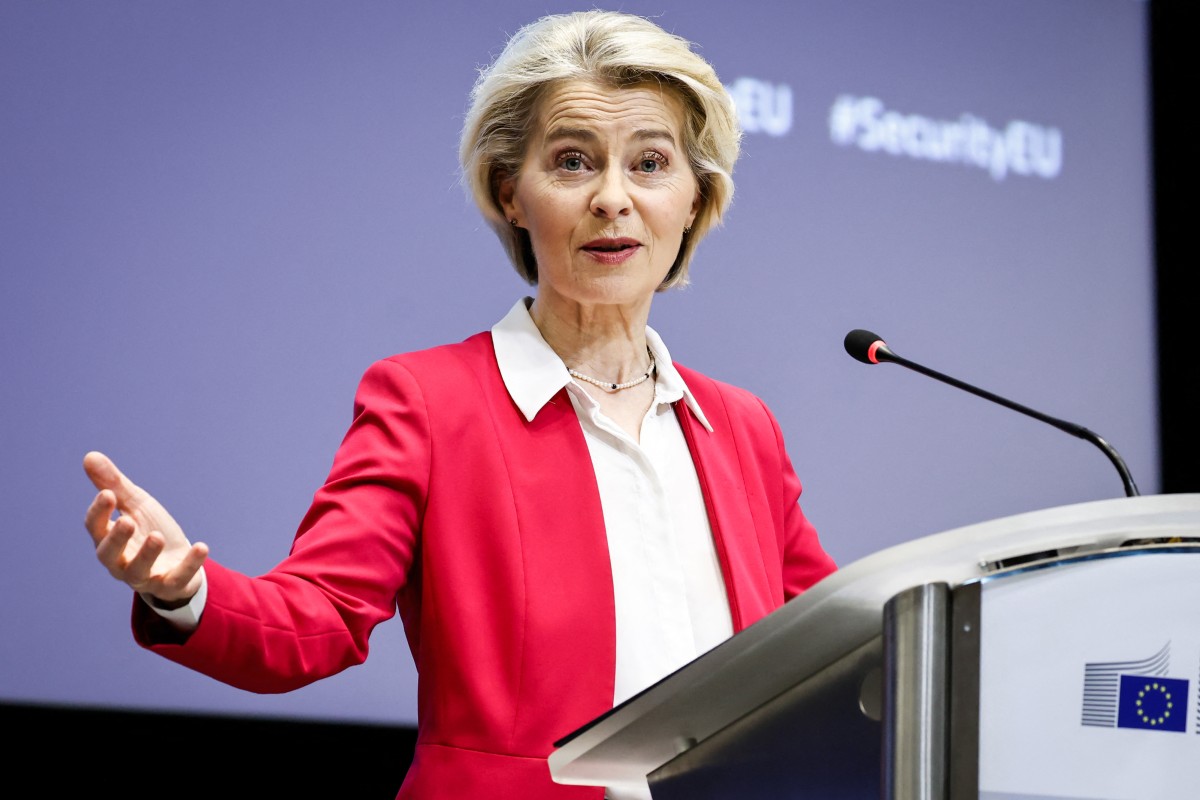
European Commission President Ursula von der Leyen will visit Syria later this week as part of a Middle East tour that also includes Jordan and Lebanon, the European Commission said on Monday.
Visit to Syria
Von der Leyen will be accompanied by European Council President António Costa when they meet Syrian President Ahmed al-Sharaa on January 9. Later the same day, the two leaders will travel to Beirut to meet Lebanese President Joseph Aoun.
The visit will mark von der Leyen’s first trip to Syria since the ousting of former President Bashar al-Assad. It comes as the international community steps up efforts to support Syria’s recovery after years of civil war that severely damaged the country’s economy and infrastructure.
The European Union has supported the Syrian people for more than 14 years through diplomatic engagement and financial assistance.
Following the collapse of the Assad government, the EU eased certain sanctions in February 2025 to allow greater engagement. In May, it took the unprecedented step of lifting economic sanctions to support Syria’s economic recovery and peaceful political transition.
In March, participants at an EU-led conference pledged $6.3 billion (€5.8 billion) in financial assistance to Syria to support its political transition and socioeconomic recovery.
EU–Jordan summit
As part of the tour, von der Leyen and Costa will also travel to Jordan to meet King Abdullah II for the first-ever EU–Jordan summit.
“The EU deeply values Jordan’s leadership and its generosity in hosting Syrian refugees for more than a decade,” Costa said. “Our first-ever bilateral summit will provide an important opportunity to strengthen our partnership and address shared challenges in these turbulent times.”
The summit will focus on deepening bilateral political and economic cooperation, in line with the EU–Jordan Strategic and Comprehensive Partnership signed in January last year.
Leaders are also expected to discuss broader global challenges, including developments in the Middle East, the war in Ukraine, security concerns, trade, and migration.