This story appeared in our September 2025 issue, featuring our annual Sustainability Leaders ranking.
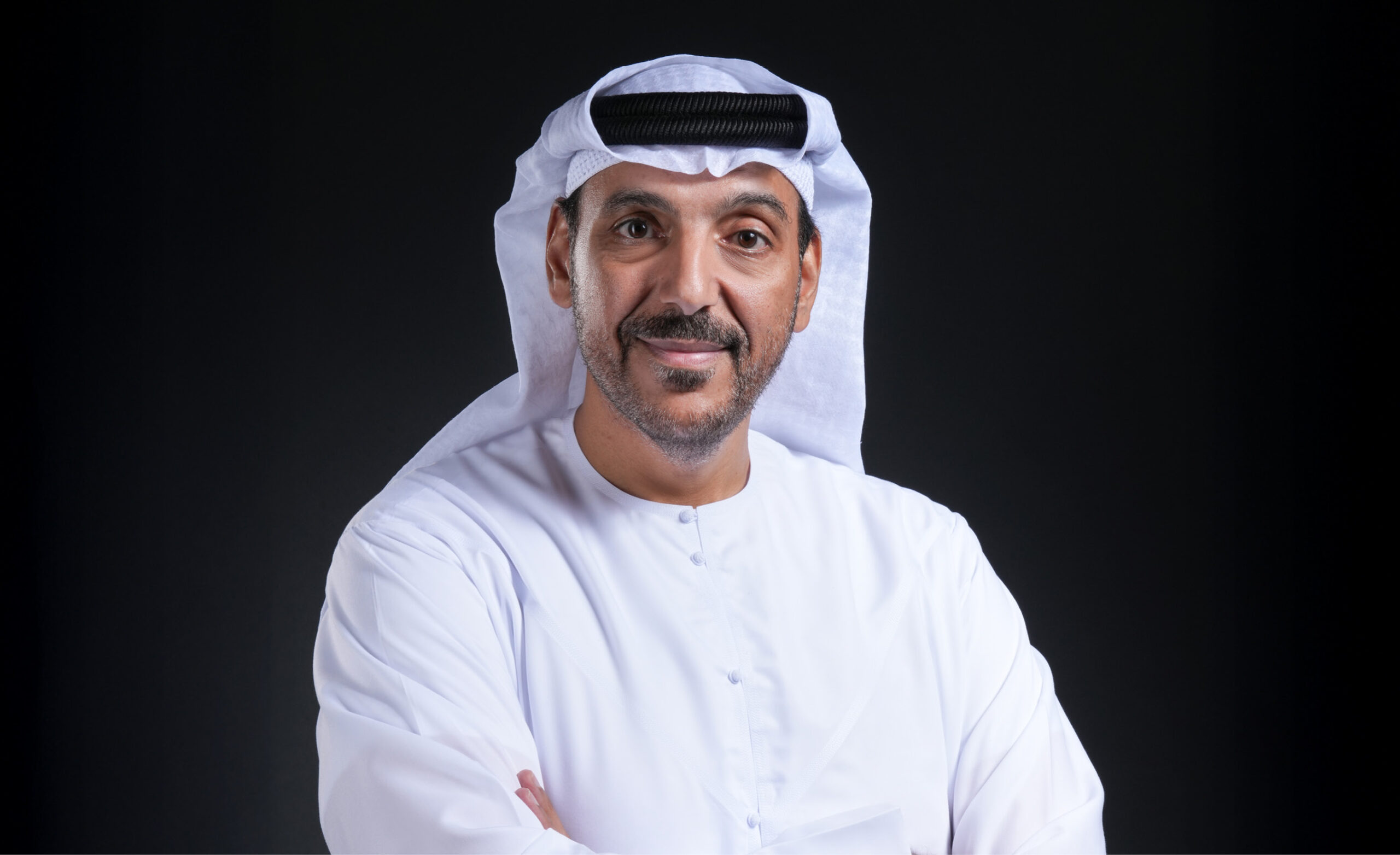
When Ali Al Dhaheri, Managing Director and CEO of the Abu Dhabi based Tadweer Group, reflects on his professional journey, it mirrors the capital’s broader transformation. From the oil fields of ADNOC to the investment landscape of Mubadala and now to the waste management operations of Tadweer Group, his career aligns with the emirate’s shift from hydrocarbons to energy transition and onward to circular economy solutions.
Today, the UAE has a defined roadmap toward a green and sustainable future. Over the past decade, the country established its National Climate Change Plan for the period from 2017 to 2050 to manage greenhouse gas emissions while sustaining economic growth. It also introduced the Circular Economy Policy for the period from 2021 to 2031 to provide a national framework for the sustainable use of natural resources, and launched the Green Agenda 2030, which aims to increase GDP by four to five percent, raise exports by approximately 6.8 billion dollars, and reduce emissions to below 100 kilowatt hours.
Tadweer Group was established by the government of Abu Dhabi in 2008 as Abu Dhabi Waste Management PJSC, known as Tadweer. In December 2022, it became part of ADQ, an Abu Dhabi based investment and holding company. In 2024, it rebranded as Tadweer Group with a new identity, vision, and strategy. Today, the company is the sole custodian of waste management in Abu Dhabi, guided by two primary goals. These are diverting eighty percent of the emirate’s waste away from landfill by 2030 and achieving a forty percent reduction in emissions by 2035. According to Al Dhaheri, the company is progressing steadily toward both targets.
Waste management plays a central role in achieving net zero, as it reduces emissions while conserving resources. However, challenges remain, including scaling infrastructure, encouraging behavioral change, and ensuring economic viability. Despite these obstacles, the UAE continues to lead at both regional and global levels through strong policies, investments in waste to energy solutions, and community engagement. The country’s integrated approach treats waste not as a liability but as a driver of sustainability.
In 2024, Tadweer Group diverted thirty four percent of Abu Dhabi’s waste from landfill, including ninety nine percent of hazardous waste. Waste generation collected by the company declined by thirteen percent, while energy consumption fell by six percent. This included a fifty two percent reduction in indirect electricity use and a three percent decrease in energy derived from non renewable fuel sources. By August 2025, the company had achieved fifty percent waste diversion from landfill and a twenty percent reduction in emissions, according to Al Dhaheri.
Long before leading the transformation of Tadweer Group, Al Dhaheri had been building the experience that prepared him for the role. He graduated as a civil engineer in 1999 and began his career at the ADNOC group, moving from engineering into commercial and contracts roles before joining major projects.
By 2008, he became involved in the Abu Dhabi National Chemicals Company, known as ChemaWeYaat, where he was appointed commercial director. The project aimed to develop a large scale petrochemical complex in Ruwais and was jointly owned by the International Petroleum Investment Company, the Abu Dhabi Investment Council, and ADNOC. Although the project showed promise, the global financial crisis forced it to pause, and it ultimately did not materialize. Today, ChemaWeYaat is part of Mubadala Investment Company.
In 2017, Al Dhaheri transitioned to the newly formed Mubadala Investment Company following the merger of Mubadala Development Company and the International Petroleum Investment Company. There, he led the downstream investment portfolio, gaining exposure to sectors adjacent to energy at a time when global attention was shifting toward energy transition, electrification, biofuels, and renewables.
In late 2022, ADQ approached Al Dhaheri with the opportunity to lead Tadweer Group. Initially uncertain due to his limited exposure to waste management and recycling, he ultimately accepted the role, viewing it as a natural progression from energy and energy transition into sustainability and environmental stewardship. He describes the move as an opportunity to help shape what he calls Tadweer Group 2.0.
At the time of his arrival, Tadweer was perceived largely as a government cost center with responsibilities extending beyond waste management. Following the transfer of ownership to ADQ, the company was repositioned to support the UAE’s circular economy agenda. Al Dhaheri’s first priority was organizational restructuring, including the separation of non core activities such as permitting, street cleaning, and pest control.
The pace of transformation accelerated in 2023. In January, the company signed five operations contracts worth more than 544.6 million dollars, covering waste collection, transportation, public cleaning services in Abu Dhabi and Al Ain, and waste container management. In March, it signed a memorandum of understanding with the Greater Amman Municipality in Jordan to explore waste management investments. In May, it launched the UAE’s first fully electric waste truck in collaboration with Renault Trucks Middle East and Al Masaood.
Changing perceptions proved more difficult than operational reform. Al Dhaheri notes that shifting the mindset from waste as a problem to waste as a valuable resource was a major challenge. He emphasizes that waste is often mischaracterized, pointing out that materials labeled as waste moments after consumption still hold value. Recognizing this opens pathways for solutions such as composting, donation, and energy generation.
Infrastructure development presented another challenge. A flagship initiative currently underway is Abu Dhabi’s first waste to energy facility, announced in October 2023 in partnership with the Emirates Water and Electricity Company. Scheduled to become operational by the second quarter of 2027, the facility is now fifty percent complete. It will divert one million tons of waste from landfill annually, generate green electricity for homes and public facilities, and reduce carbon emissions by an estimated 1.1 million tonnes per year, aligning Abu Dhabi with international benchmarks.
In February 2024, Abu Dhabi Waste Management Company rebranded as Tadweer Group. In July 2024, the company announced the creation of four subsidiaries. These include Tadweer Environmental Services and Solutions for public waste collection, Tajmee’e for pre collection services, UpCycle for advanced recycling technologies, and Tahweel to accelerate waste to energy and waste to value projects.
In May 2024, Tadweer Group revealed plans for a fully automated material recovery facility. Designed to enable the sorting and recycling of mixed waste, the facility is expected to be operational by the end of 2026. It will initially process 400,000 metric tonnes of waste annually, with capacity increasing to 700,000 metric tonnes.
Technology plays a central role in the company’s operations. Artificial intelligence is used for fleet management, route optimization, sensor monitoring, and landfill analytics to forecast waste volumes and composition. In February 2025, Tadweer Group partnered with FAMS Technologies to launch the region’s first AI integrated waste management platform.
In July 2025, Tadweer Group acquired Masdar’s stake in the Sharjah Waste to Energy Plant, forming a joint venture with BEEAH Group under the Emirates Waste to Energy company. The plant processes more than 300,000 tonnes of waste each year, generates 30 megawatts of renewable electricity, powers up to 28,000 homes, and prevents 450,000 tonnes of carbon emissions annually while conserving significant volumes of natural gas. A planned expansion will nearly double capacity and further increase emissions reductions.
Tadweer Group’s influence is also expanding internationally. During COP28 in December 2023, the company partnered with the UAE Ministry of Climate Change and Environment to launch the Global Waste to Zero initiative. The program aims to support global emissions reduction efforts and contribute to net zero goals by 2050. By April 2025, the initiative had attracted more than fifty global partners across governments, industry, technology, and investment.
Looking ahead, Al Dhaheri plans to expand Tadweer Group’s international footprint while maintaining focus on local objectives. He describes the company as having strong ambition and a healthy pipeline of opportunities, with international participation forming a growing part of its long term strategy.