This story appeared in our June 2025 issue, featuring the Top 100 Listed Companies in the Middle East.
Under its Vision 2040, the Sultanate of Oman is advancing an ambitious strategy to diversify its economy, deepen capital markets, and attract global capital across high growth sectors, including a more competitive and sustainable energy industry. This shift is gaining momentum as the country adapts to changing global energy dynamics. As of May 30, 2025, Brent crude futures stood at $62.8 per barrel, down 18.8% from around $77.3 a year earlier. Oman’s public revenues also fell 7% to $6.8 billion by the end of Q1 2025. This decline, primarily due to reduced hydrocarbon revenue, led to net oil revenue dropping 13% to $3.8 billion in the first three months of 2025. However, these numbers reinforce the value of Oman’s forward looking reforms and the rising role of performance driven national champions.
At the forefront of this transformation stands OQ Exploration and Production (OQEP). Founded in 2009 as Oman Oil Exploration and Production LLC (OCEP), the company was rebranded in 2024 as OQ Exploration and Production (OQEP) following its integration into OQ Group in 2019, Oman’s global integrated energy group. During this 16 year journey, the company grew from a single asset with a modest production rate of 18,000 barrels of oil equivalent per day in 2009 to a portfolio of over 14 assets today, nine of which are producing, with an average working interest production rate of approximately 220,000 barrels of oil equivalent per day. This represents a growth in production of 13 times, with OQEP now being responsible for around 14% of Oman’s oil and gas production.
In October 2024, OQEP listed 25% of its equity on the Muscat Stock Exchange, becoming Oman’s largest ever IPO, raising $2 billion with a valuation of more than $8 billion, supporting Oman’s Vision 2040 goals of divesting government assets and strengthening the capital market. OQEP’s IPO was oversubscribed 2.7 times, demonstrating strong confidence from local and international investors, both in OQEP and Oman’s capital market.
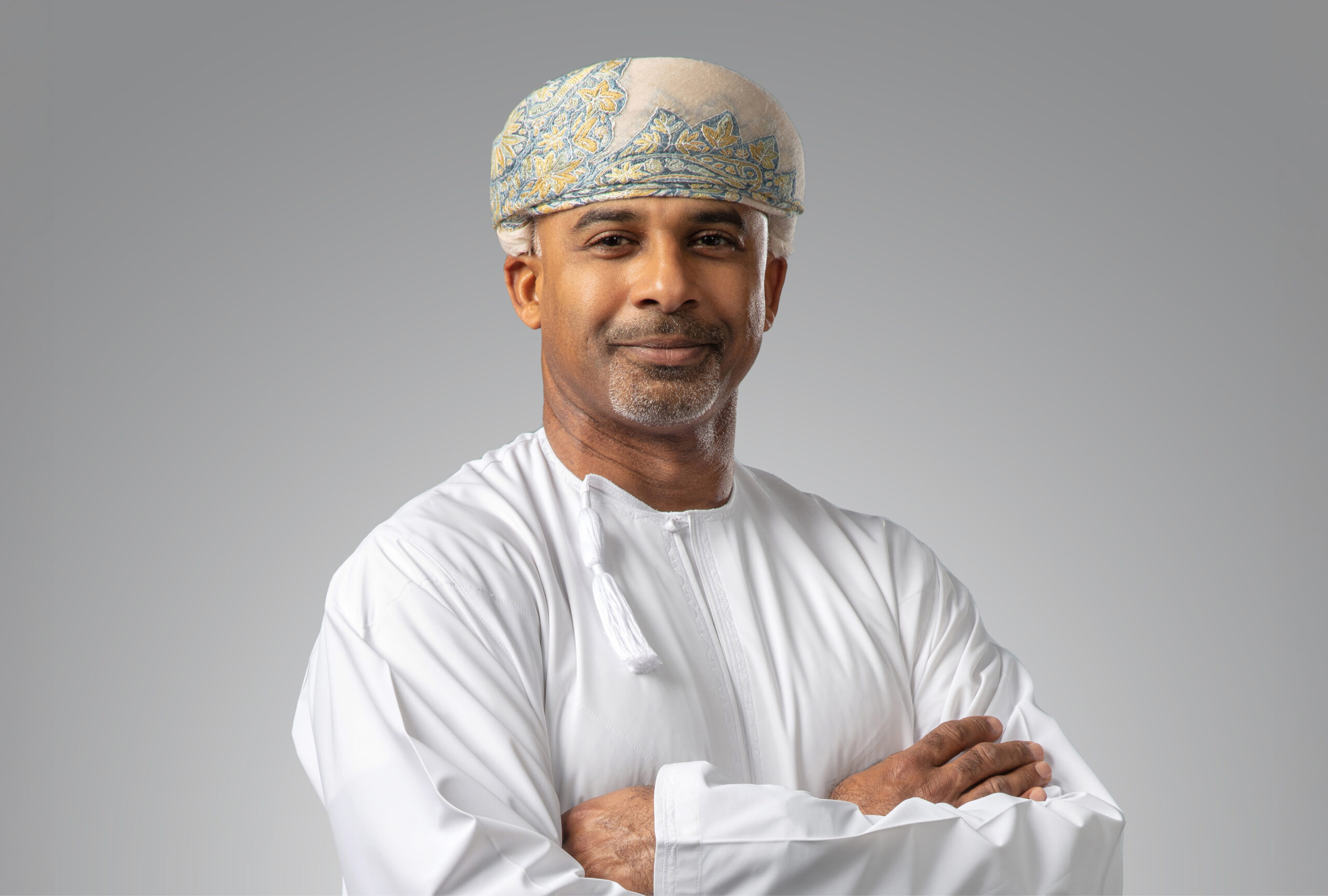
This robust growth trajectory culminated in OQEP’s latest milestone, its landmark IPO on the Muscat Stock Exchange in October 2024. “The IPO was our priority last year, and it marked the largest listing in Oman’s history,” says Ahmed Al Azkawi, CEO of OQEP. The $2 billion IPO was the largest in Oman and the second largest in MENA in 2024. OQEP was Oman’s most valuable listed company, with a market capitalization of $6.2 billion as of May 2025.
OQEP’s offering came amidst a robust regional IPO landscape. In 2024, MENA witnessed 54 IPOs, a 12.5% increase year on year, raising a total of $12.6 billion, up 17.6% from the previous year. This strong momentum continued into Q1 2025 with 14 IPOs raising $2.4 billion, more than double the proceeds from 10 IPOs in Q1 2024, EY reported.
“OQEP’s IPO marks a major milestone for Oman’s capital markets. This IPO was not merely a financing step, it was a clear signal that Oman’s market is now ready to absorb large scale listings and has developed the fundamentals to attract global institutional investors,” says Ali Hasan, CEO of Evest. “In recent years, we’ve seen Oman steadily advance its regulatory infrastructure and strengthen transparency under the Oman Vision 2040 framework. The OQEP offering is a direct outcome of that trajectory. In my view, this IPO will pave the way for other companies, both public and private, to seriously consider the capital market as a viable platform for funding and expansion.”
“We’ve got a strong track record of financial resilience and growth, and we want to maintain that track record as we move forward.”
This optimistic outlook for Oman’s capital market comes as the nation’s economy strengthens. The International Monetary Fund reported in June 2025 that Oman’s real GDP grew 1.7% in 2024, up from 1.2% in 2023, driven by robust non oil activity. Growth is projected to reach 2.4% in 2025 and 3.7% in 2026, supported by sustained investment and structural reforms despite lower oil prices.
However, OQEP’s revenue in Q1 2025 fell by 1.9% year on year to $534.4 million, while net profit dropped by 8.9% to $194.7 million. This decline was mainly due to lower average realized oil prices, which slipped to $75.3 per barrel from $79.7, and gas, down to $3.21 per mmscf from $3.36. Production also eased slightly to 221,200 barrels of oil equivalent per day, compared to 224,400 in the same period last year, following planned maintenance at a key joint venture asset.
Despite these market and operational factors, the CEO asserts that OQEP surpassed its Q1 2025 net profit target, driven by stronger than expected oil output and disciplined cost management, adding that the second quarter is also tracking ahead of expectations and continuing to perform well. Moreover, EBITDA rose slightly to $397.1 million, achieving a margin of 74%. This trajectory highlights the company’s ability to generate sustainable value through disciplined capital allocation, operational excellence, and a balanced portfolio of oil and gas assets. As the company looks ahead, it remains focused on maintaining strong cash flow generation, supporting its dividend policy, and investing in long term growth opportunities across Oman’s upstream sector.
The company’s dividend policy underscores its commitment to delivering shareholder value, targeting a base dividend of $600 million annually for both 2025 and 2026, with the potential for a Performance Linked Dividend. This policy is supported by strong cash flow generation, $368.8 million recorded in Q1 2025 alone, and a conservative leverage ratio of 0.4x EBITDA, reflecting the company’s robust financial discipline. “We remain firmly committed to fulfilling our promises to shareholders, especially when it comes to dividend distribution. Once you become publicly listed, your market exposure widens, and your shareholder base grows. However, this also brings a responsibility to our new shareholders,” affirms Al Azkawi.
To sustain the momentum post IPO, OQEP actively advanced its exploration portfolio through new partnerships and asset developments. In February 2025, OQEP partnered with Scotiabank to market Blocks 36, 43A, and 66 as part of a wider initiative with the Ministry of Energy and Minerals to promote 11 blocks by 2026. In March 2025, on the exploration front, the company signed a new EPSA for Block 54 with Genel Energy. This under explored block in the South Oman Salt Basin represents a promising frontier, and the JV partners expect to invest up to $25 million over three years in the initial exploration phase. Additionally, the company secured a six month extension for drilling at Block 47, where early indications suggest the potential for significant gas discoveries.
Overall, OQEP maintains a robust network, operating 14 upstream assets and serving as the government’s partner of choice in new block development. Most of its capital is currently deployed domestically, and the company is actively marketing new blocks such as 18, 36, 43A, and 66 on behalf of the Ministry of Energy and Minerals.
“Oman’s energy landscape is becoming more flexible, in terms of welcoming investments and regulations,” according to Al Azkawi. “The company and its JV partners operate one of the world’s largest steam floods at Mukhaizna and use advanced hydraulic fracturing. Recent projects include a $1.6 billion fully electrified Marsa LNG bunkering plant with TotalEnergies, supplying alternative maritime fuel,” he adds.
In May 2025, OQEP signed Amendment No. 2 to the Production Sharing Agreement for Block 53 with the Ministry of Energy and Minerals and its partners, extending the deal through 2050. The extension reinforces the company’s long term commitment to Oman’s energy sector. The agreement could unlock over 800 million barrels of gross resources, boosting value across stakeholders.
As part of its strategy, OQEP is focused on maintaining strong operating fundamentals to stay resilient amid oil price volatility. “We have a good mixture of oil and gas. Gas is typically sold at long term fixed prices, so it’s less exposed to market swings,” says the CEO. Drilling optimizations are also underway to accelerate production and cushion against potential price declines. Commenting on lower oil prices in Oman, Cedric Berry, Director of EMEA Sovereign Ratings at Fitch Ratings, says, “Lower oil prices will reduce the cost of spending on fuel subsidies that reached about 0.7% of GDP in 2024. We project Oman to run a small budget deficit of 0.5% of GDP in 2025. The authorities continue to improve tax enforcement while streamlining taxes and fees, resulting in moderate growth of non oil revenue.”
In May 2025, Oman and seven OPEC plus members agreed to raise output by 411,000 barrels per day starting in July, following the December 2024 decision to gradually ease the 2.2 million bpd voluntary cuts announced in April and November 2023. Despite market challenges, Oman’s energy landscape is becoming increasingly flexible, with more investor friendly regulations designed to attract both local and international players, according to Al Azkawi, adding that OQEP sits at the center of this transformation, holding access to most of the country’s upstream blocks and leading the marketing of key bid rounds. “As a core contributor to Vision 2040, OQEP delivers 12 to 14% of Oman’s oil and gas output and played a pivotal role in advancing the country’s capital market through its 2024 listing,” says the CEO.
The company also maintains one of the lowest emissions intensities in the sector, at around 15 kilograms of CO2 equivalent per barrel of oil equivalent, Al Azkawi asserts, who assumed his current role in August 2024. Before the company’s rebranding, he served as Chief Executive Upstream at OQ from September 2021 to August 2024. Upon taking the helm, the CEO initiated a strategic overhaul, developing talent suited for a publicly listed entity with aggressive growth targets, reinforcing core business principles, and adopting advanced technologies.
Al Azkawi’s extensive career in the oil and gas industry began in 1997 at Petroleum Development Oman, where he gained broad technical expertise across gas fields, light oil, heavy oil, and enhanced oil recovery. He was the VP of Procurement, Contracts, and Inventory at Orpic from November 2017 to October 2019, and notably held the CEO position at Khazaen from October 2015 to October 2017. His diverse background also includes strategic roles such as project director for the South Al Batinah Logistics Area from August 2013 to September 2015.
Looking ahead, the CEO supervises a strategy built on three core priorities. First, the company aims to have gas make up about 50% of its total energy portfolio. Second, it focuses on integrated projects, combining extraction with processing, similar to its Marsa venture. Third, OQEP consistently targets a reserves replacement ratio of about one. This means that for every barrel of oil or cubic foot of gas OQEP extracts, it strives to discover and officially add roughly the same amount back into its proven reserves. This practice is essential for securing a steady, long term supply of energy and ensuring the company’s future stability.
This strategic commitment to long term resource security underpins OQEP’s robust operational performance. Over the past four years, OQEP grew production from 150,000 barrels of oil equivalent per day in 2020 to 250,000 in 2023, before divesting 40% of Blocks 60 and 48, bringing output back to 228,000 in 2024. Oman is the GCC’s fourth largest oil producer, with 815,000 barrels per day in 2023, behind Saudi Arabia, the UAE, and Kuwait, according to OPEC’s Annual Statistical Bulletin 2024.
For its next chapter, OQEP is evaluating a range of international expansion opportunities as part of its long term growth strategy. “We’ve got a strong track record of financial resilience and growth, and we want to maintain that track record as we move forward,” says Al Azkawi. “We’ll continue delivering value to our shareholders.”