Inside the Team Principal and CEO’s playbook for futureproofing the Mercedes AMG six billion dollar Formula One empire for the next era
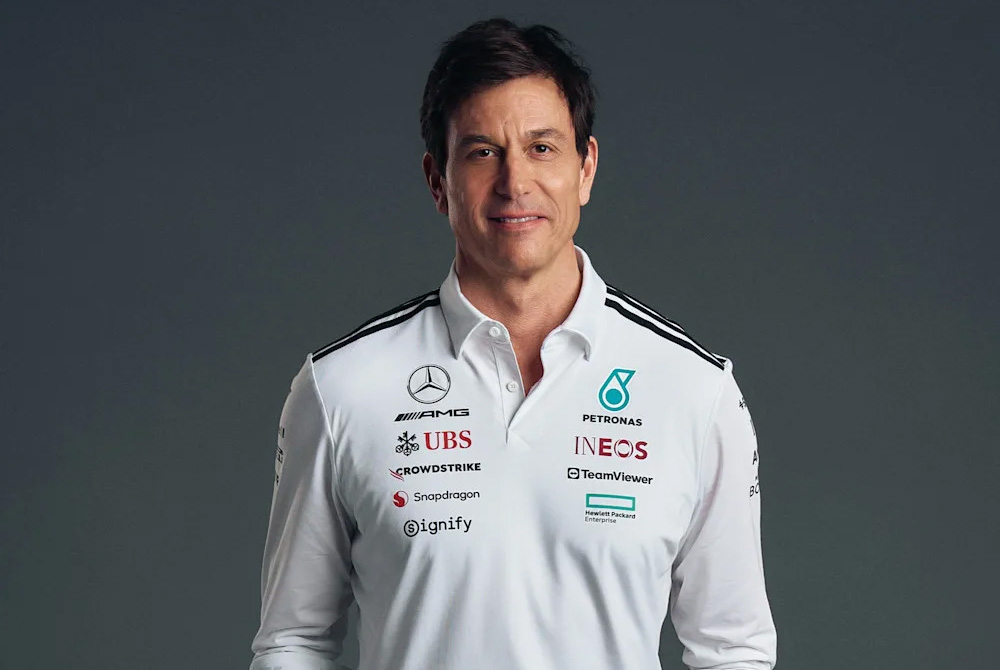
Toto Wolff has a confession that would make most executives uncomfortable. We are 30,000 feet above the ground on his private jet, flying from the Montreal Grand Prix to New York in mid June for the Formula One movie premiere starring Brad Pitt. It has been a whirlwind race weekend, ending with lead driver George Russell and 18 year old Italian newcomer Kimi Antonelli finishing first and third. Still, the man who built Mercedes AMG Petronas into one of the most dominant teams in Formula One history reveals that a single word makes him recoil.
Leadership.
Wolff has overseen eight consecutive Constructors’ World Championships and 131 Grand Prix victories, a record unmatched in any major global sport. With a net worth of 2.5 billion dollars, the 6’5”, 53 year old Austrian has every reason to lean on a traditional chief executive playbook. Instead, he rejects it entirely. If there is one thing he believes without hesitation, it is that racing is a team sport.
“I feel embarrassed talking about leadership,” Wolff says, gazing out the window at the sunset above the clouds. He is dressed casually in a denim button down, white t shirt, and chinos. Just days earlier, he spent the entire race weekend behind the engineering desk in the team garage, surrounded by 58 engineers and technicians working amid the roar of Formula One engines and the screech of pneumatic wheel guns. Their objective was singular: reach the podium and move closer to championship contention. Mercedes AMG would ultimately finish the season second in the Constructors’ standings.
“This notion of one leader is something that I really struggle with,” Wolff continues. “I could never be the best chief financial officer, the best chief marketing officer, and the best chief executive all in one. I see myself as part of the team. If a final decision needs to be made, I will make it. But I rely on the collective.”
Coming from the man who transformed a struggling Formula One operation valued at roughly 165 million dollars in 2013 into a six billion dollar powerhouse, the statement demands closer examination. Wolff’s discomfort with hierarchy is not philosophical. It is operational.
Mercedes AMG Petronas employs roughly 2,000 people across its headquarters in Brackley, where 1,250 staff focus on chassis development, and its engine facility in Brixworth. Wolff says he forms an initial judgment of a candidate within thirty seconds. Technical ability comes later. “It all starts with personality and character,” he explains. Overconfidence is unacceptable. Arrogance or a lack of humility is a deal breaker.
Former Mercedes driver Valtteri Bottas, who raced under Wolff for five seasons, describes it simply. “One of his biggest strengths is reading people. Everyone is different. Some need more pressure. Some need less. He figures out what works for each person.”
Wolff describes his role as creating an environment where people feel both protected and challenged. “I see it as my tribe,” he says. “I need to protect them. But I also need to give clarity of mission.”
That mission leaves no room for complacency. “You have to be great. If you slide from great to good because you lose motivation or fall behind technologically, then this is an ejection seat.”
His responsibility, he insists, extends far beyond lap times. “I am responsible for two thousand people, their families, their standards of living, their mortgages, their dreams.”
Russell sees this philosophy embedded throughout the organization. “Toto has always believed in youth and in promoting the next generation,” he says. “But you need balance. You cannot put a junior into a senior role without experienced support alongside them.”
Russell points to Wolff’s decision to promote Antonelli as proof. “Toto could promote Kimi because he trusted the foundation. I am seven years into Formula One and have won races. There was stability.”
But the real challenge, Russell adds, is knowing when to change a winning formula. “If something is working, how do you find the courage to change it before the next cycle arrives?”
Wolff’s answer is unwavering. “I only take calculated risks. A calculated risk means the worst possible outcome is still something I can live with.”
That philosophy stems from childhood. Wolff’s father developed brain cancer, lost his business, and died heavily in debt. His mother, a doctor, spent years repaying what remained. “Losing your father like that is traumatic,” Wolff says. “It is why I never take risks that could damage my family’s future.”
He acknowledges that this mindset has left significant profit unrealized. He has no regrets.
That discipline shaped the unlikely path that led him to the center of Formula One power. After an early racing career, Wolff founded an investment firm in 1998 focused on internet and technology companies. He later backed HWA AG, the company behind Mercedes Benz’s DTM and Formula Three programs. In 2002, he co founded a driver management firm with two time world champion Mika Hakkinen while continuing to race himself.
His entry into Formula One ownership began as financial opportunity. In 2009, Wolff acquired a 16 percent stake in Williams. Three years later, he joined the board. Williams won its final race in 2012.
That same year, Mercedes asked Wolff to evaluate its struggling team. His diagnosis was blunt. Championship ambitions did not match sixth place results. Mercedes offered him the top job. Wolff declined. He did not want to be an employee.
Mercedes restructured ownership so Wolff could buy equity. The return was extraordinary. His stake ultimately multiplied roughly forty times. Until recently, he owned 33 percent of Mercedes AMG Petronas, the foundation of his personal fortune.
Today, Mercedes is among the most profitable teams in global sport, generating an operating profit of 202 million dollars in 2024. Beginning in 2014, the team captured seven consecutive Constructors’ and Drivers’ Championships, winning nearly three quarters of all races during that period.
Wolff’s next strategic move is designed to position Mercedes for the next era. Ahead of the Las Vegas Grand Prix, he sold a 15 percent minority stake in his holding entity to George Kurtz, founder and chief executive of CrowdStrike.
“George is unusual,” Wolff says. “He is a racer, a long time Mercedes AMG partner, and a technology entrepreneur who understands scale.”
Kurtz has partnered with Mercedes AMG since 2018 and serves as technology advisor alongside Mercedes Benz chairman Ola Kallenius and INEOS founder Jim Ratcliffe. He sees Formula One as a rapidly expanding global platform. “It is growing everywhere, especially in the United States,” Kurtz says. “The reach is extraordinary.”
For Kurtz, ownership was a natural progression after years as a partner. He will support innovation, data analytics, and performance while helping deepen the team’s connections to the global technology ecosystem. “In racing and cybersecurity, milliseconds matter. Execution matters. Data wins.”
Their deal reflects Formula One’s broader transformation. Team valuations now average 3.6 billion dollars, nearly doubling in two years. The sport reaches 1.5 billion television viewers globally and has surged in the United States, fueled by streaming exposure and new races.
Cadillac will join the grid in 2026, backed by General Motors. The cost cap system has turned teams into scarce, valuable assets. Mercedes, valued at six billion dollars, now sits alongside Ferrari at the top of the sport’s financial hierarchy.
Yet Wolff’s focus is narrowing, not expanding. He is shutting down diversification efforts such as sailing projects and external consulting. “We are a Formula One racing team,” he says. “Nothing else.”
The decision follows Mercedes’ struggles after the 2021 regulation changes. Though the team won the Constructors’ title that year, it lost the Drivers’ Championship. “We did not get it right,” Wolff admits.
Looking ahead to 2026, when sustainable fuels and new hybrid power units arrive, he sees opportunity. “Formula One is the fastest laboratory in the world. Innovation is the point.”
With new manufacturers entering and global stakes rising, Wolff is consolidating around core strengths, integrating technology expertise, and sharpening focus.
For a man who turned a single equity stake into a multibillion dollar fortune, the future matters more than past dominance. Russell puts it plainly. “You cannot take three steps at once. We are building. Success does not happen overnight.”