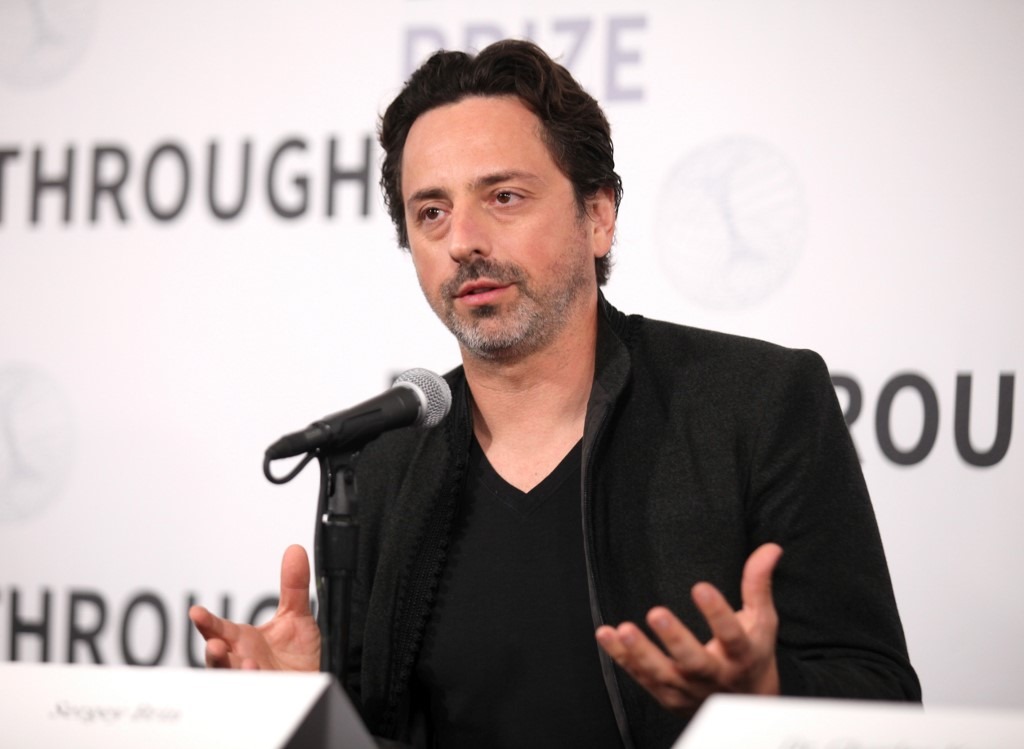
The world’s eighth richest person and the largest individual donor to Parkinson’s disease research has transferred a significant portion of his Alphabet shares to charitable organizations that support healthcare research and treatments.
Last week, Google cofounder Sergey Brin donated Alphabet shares worth seven hundred million dollars. According to a representative from Brin’s family office, the donations were divided among three nonprofit organizations. Nearly eighty percent of the shares, valued at approximately five hundred fifty million dollars, were given to Brin’s four year old nonprofit Catalyst4. The remaining shares were allocated to the Sergey Brin Family Foundation with one hundred million dollars and the Michael J Fox Foundation with fifty million dollars, which focuses on Parkinson’s disease research and treatment.
Brin, who is fifty one years old, has an estimated net worth of one hundred thirty seven billion dollars and ranks as the eighth richest individual globally. He is the largest individual contributor to Parkinson’s disease research, having donated more than one and a half billion dollars. The disease affected his mother, who passed away last year, and Brin carries a genetic mutation that significantly increases his likelihood of developing Parkinson’s compared to the general population. He has also committed substantial funding to research into bipolar disorder and autism, as previously reported by Forbes. Brin’s team has established an umbrella organization to oversee research in these areas known as CNS Quest, which stands for central nervous system. According to his representative, the recent transfer of Alphabet shares to Catalyst4 will largely support the work carried out by CNS Quest.
Brin has described his philanthropic mission as deeply personal, explaining that it began with Parkinson’s disease and his own genetic mutation known as G2019S in the LRRK2 gene. Although he keeps his personal life private, all three conditions studied under CNS Quest have affected members of his family. His increased contributions to Catalyst4, which operates as a 501 c 4 nonprofit and is permitted to lobby the government and own for profit companies, may reflect a broader change in his overall charitable strategy.
So far, Brin has donated at least one and a half billion dollars to Catalyst4. In late two thousand twenty one, he initially funded the organization with more than four hundred fifty million dollars in Alphabet and Tesla stock, followed by an additional six hundred fifteen million dollars donation in two thousand twenty three. While Catalyst4 remains smaller than the Sergey Brin Family Foundation, which held assets of four billion dollars at the end of two thousand twenty three, Brin has recently directed more funding toward Catalyst4. His family foundation continues to support various climate and education initiatives.
Through Catalyst4, Brin aims to address both foundational scientific research and the development of treatments and therapies, which are often driven by for profit companies. Ekemini Riley, a molecular medicine PhD who helps lead CNS Quest, previously explained that funding both scientific research and clinical development in parallel is critical, as it allows insights to flow between laboratory science and real world applications such as trial design, drug development and therapeutics.
In practice, this approach has included investments in biopharmaceutical companies through Catalyst4. Brin has supported startups and venture capital funds working on commercial treatments, investing more than six hundred million dollars so far, including roughly four hundred million dollars in two thousand twenty four alone.
According to nonprofit tax records, Catalyst4 holds a majority stake in biopharmaceutical company MapLight, which is developing treatments for brain disorders and autism. MapLight is currently enrolling patients in Phase two clinical trials for a drug candidate designed to improve social communication challenges in certain individuals with autism. In February, Catalyst4 also led an eighty million dollar funding round for Stellaromics, a company that creates detailed three dimensional maps of gene activity in tissue samples for use in drug development. Any profits generated from these investments must be reinvested into the nonprofit. In addition, Catalyst4 has provided some portfolio companies with philanthropic funding, often accounting for about twenty five percent of the total investment, alongside its equity stakes, according to individuals familiar with Brin’s philanthropic efforts.
It remains unclear how Brin will deploy his most recent donation to further the objectives of CNS Quest and Catalyst4. However, the expansion of his philanthropic efforts is expected to continue, particularly as federal funding for medical research and clinical trials faces reductions under the Trump administration.