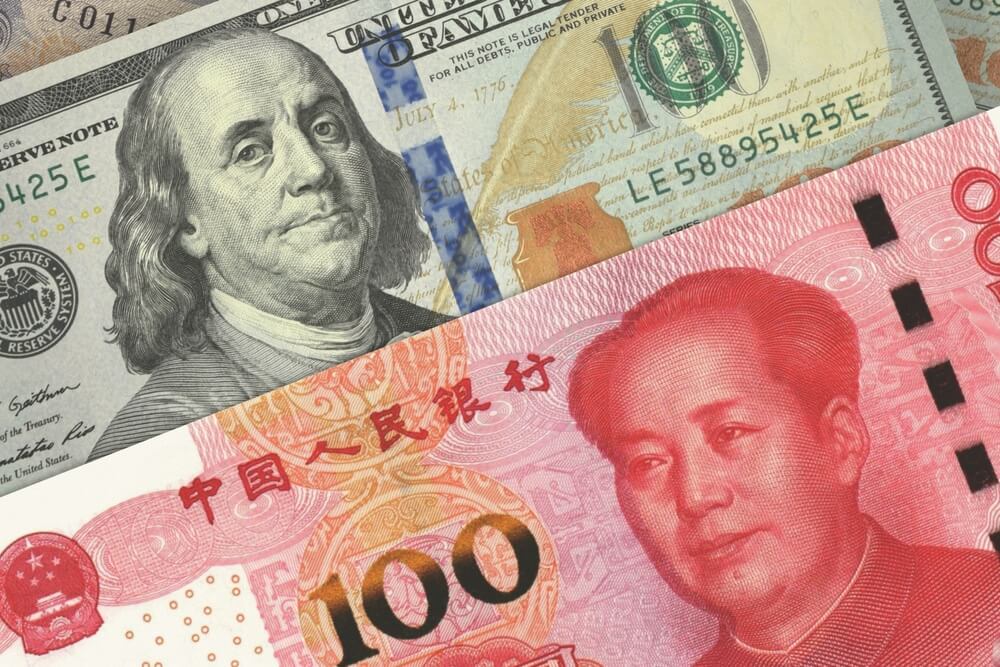
The Chinese yuan strengthened to the key 7-per-dollar level in the onshore market for the first time since 2023, marking a notable milestone in the currency’s recent appreciation.
Yuan gains momentum
The yuan rose by as much as 0.2% to 6.9900 per dollar in onshore trading, supported by a weaker US dollar and increased foreign exchange selling by Chinese corporates and exporters toward the end of the year.
Major Chinese banks were reported to have stepped up dollar purchases after the onshore yuan crossed the 7-per-dollar threshold, while corporate demand for greenback selling increased to meet settlement needs. The offshore yuan had already moved through the 7 level last week.
So far in 2025, the yuan has strengthened by more than 4% against the US dollar.
Managed appreciation
The measured pace of gains in the onshore market reflects Beijing’s preference for a controlled and gradual currency appreciation rather than a rapid surge. Chinese authorities maintain tighter oversight of the onshore market compared with the more freely traded offshore market.
Onshore trading remains constrained by the 2% daily trading band around the reference rate set by the People’s Bank of China.
Market participants note that policymakers are likely comfortable with a modestly stronger yuan as long as movements remain orderly and do not threaten financial stability.
Outlook
Several analysts expect the yuan to continue strengthening against the dollar into 2026, albeit at a gradual and uneven pace. Forecasts point to the currency reaching around 6.90 per dollar in the third quarter of 2026, while others expect it to trade near 7 per dollar by the second quarter of that year.
Analysts note that future moves in the yuan are likely to be driven primarily by shifts in the US dollar rather than domestic factors. Despite ongoing trade tensions with the United States and periods of weakness against other currencies, the yuan is on track for its strongest annual performance in five years.
Market watchers add that sharp moves below the 7-per-dollar level could prompt intervention, while a steady, controlled appreciation is more likely to be tolerated by policymakers.